 By
By 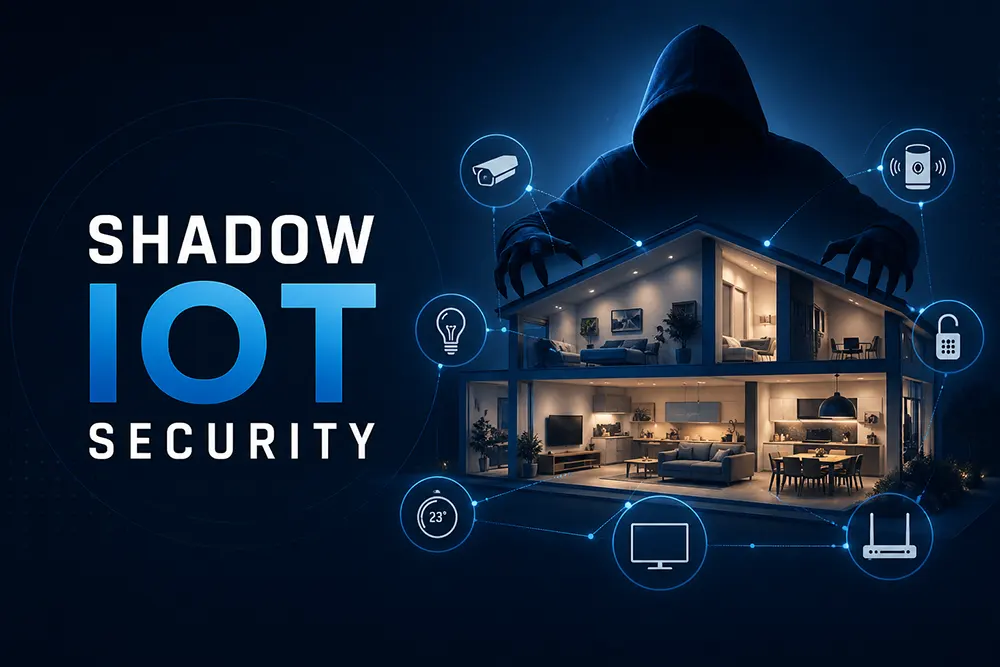
You’ve installed the latest antivirus on your laptop. You use biometrics for your phone. You’ve even enabled 2FA on every social media account. But what about the $10 Wi-Fi lightbulb in your hallway? Or that “smart” air purifier you bought on sale last year? In the world of Cyber Security 101, we call these “Shadow IoT” devices.
Shadow IoT security refers to any device connected to your network that operates without oversight, security updates, or even your active knowledge. It is the “Unsmart” Paradox: the simpler the device, the more likely it is to be the “smartest” way for a hacker to infiltrate your home. According to recent data from Vectra AI, there are now over 21.1 billion connected devices globally in 2026, creating a massive attack surface that OnlineShieldHub is committed to helping you navigate. These devices are often “set and forget,” but while you’ve forgotten them, threat actors haven’t. In fact, early 2026 data shows that connected homes now face an average of 29 daily attack attempts—a threefold increase from previous years.
Why Shadow IoT Security is a “Gold Mine” for Attackers
Hackers aren’t always looking for the front door; they look for the open bathroom window. Shadow IoT devices are that window for three primary reasons:
1. The Chronic Lack of Updates
Most “budget” IoT manufacturers prioritize speed-to-market over long-term Shadow IoT security. Many devices never receive a single security patch after leaving the factory. This mirrors the critical vulnerabilities identified in the OWASP Top 10:2025 list, where security misconfigurations and software supply chain failures remain rampant. If a vulnerability is discovered, much like the XWiki RCE exploit, it remains open forever on unmanaged gadgets.
2. Hardcoded and Weak Credentials
Many Shadow IoT devices come with “hardcoded” credentials—usernames and passwords like admin/admin or 1234 that are baked into the code. This is a massive failure in basic privacy checklists. In some cases, these cannot be changed by the user, making them a universal key for anyone using a basic automated scanner.
3. Over-privileged Network Access
By default, most home routers treat every device equally. There is no reason your smart toaster needs to “talk” to your NAS (Network Attached Storage). Without proper network segmentation for IoT, that toaster has a direct line to your most sensitive data. According to SentinelOne, routers are now the main gateway for 75% of IoT-related cyber attacks in 2026.
Common Shadow IoT Security Offenders in 2026
As we move through 2026, the volume of connected “things” has exploded. Here are the usual suspects currently residing in your unsecured smart home:
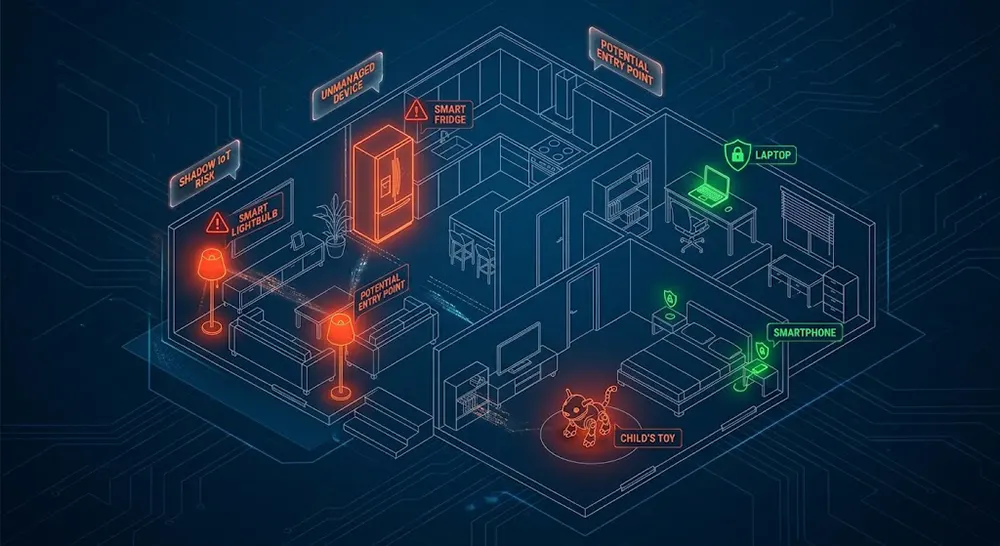
Smart Lighting & Power Plugs
Because they are cheap and ubiquitous, smart plugs are the #1 entry point for attackers. These devices are often produced by white-label manufacturers with zero security infrastructure. For a safer setup, consider using an AI firewall for home devices to monitor their traffic patterns.
Connected Kitchen Appliances
Your fridge, coffee maker, and oven are likely running ancient, stripped-down versions of Linux kernels. These “zombie” systems are rarely checked for IoT vulnerabilities but remain connected to your Wi-Fi 24/7. This makes them perfect targets for botnets and coin-miners that drain your electricity and bandwidth.
Smart Toys & Pet Tech
This is the “emotional backdoor.” Smart teddy bears or automated pet feeders can leak audio, video, or even GPS location data of your family. This risk is particularly high as we move toward more integrated neurotech and privacy concerns, where the line between personal data and physical safety blurs.
Legacy “Ghost” Devices
That old smart TV in the guest room or the printer you haven’t used in two years? If they are plugged in and connected to Wi-Fi, they are active targets for lateral movement. These devices often lack the hardware capability to support modern Shadow IoT security protocols.
The Impact: From Privacy Leaks to IoT Botnets
What actually happens when a hacker “takes over” your smart bulb? The reality is more clinical and dangerous than just flickering your lights; it’s about the data and the network.
The Botnet Recruitment
Your device might become a soldier in an IoT Botnet. Thousands of compromised devices are harnessed together to launch DDoS (Distributed Denial of Service) attacks against banks or infrastructure. This is often how shai-hulud worm attacks propagate, using your home’s bandwidth to cause global disruption without your knowledge.
Lateral Movement within the Network
This is the most significant risk to the individual. Once a hacker gains a foothold on a weak smart plug, they use lateral movement to scan your network for your work laptop or personal phone. This is why OnlineShieldHub recommends privacy-first smartphones and high-end security suites as your last line of defense.
Silent Data Exfiltration
Many low-end devices are programmed to “call home” to servers in foreign jurisdictions. They may be quietly uploading your usage patterns, voice snippets, or even a map of your home (in the case of robot vacuums) to unsecured third-party databases. These data points are then sold on the dark web or used to profile your daily habits for future social engineering attacks.

Hardening Your Home: The Shadow IoT Security Defense Manual
Securing your Shadow IoT security posture doesn’t require a degree in computer science. Follow these four steps to turn your home into a digital fortress against invisible intruders.
1. Implement Network Segmentation (VLANs)
This is the “Gold Standard” of Cyber Security Tutorials. By creating a separate “Guest” network on your router, you effectively isolate your devices.
- Action: Move all smart bulbs, plugs, and appliances to the Guest Network.
- Result: If a hacker breaches your smart toaster, they are “trapped” on the guest network and cannot see your work laptop or sensitive NAS data.
2. Use a Dedicated IoT VPN
For total peace of mind, routing your smart home traffic through one of the best VPNs for IoT smart home security can mask your device’s presence from the public internet. This prevents automated scanners from finding your unsecured smart home in the first place.
3. Conduct a Regular Shadow IoT Audit
You cannot secure what you cannot see. Log into your router’s web dashboard to see a list of every connected MAC address. If you see a device you don’t recognize, block it immediately. For advanced users, setting up a local private LLM can help automate the monitoring of these connection logs.
4. Physical Kill Switches and Firmware Checks
Does your coffee maker really need to be connected while you’re at work? If a device doesn’t provide value through its “smart” features at a given moment, unplug it. Always check for firmware updates; if a device is too old to receive them, it’s time for an upgrade. Check our Buyers Advice for recommendations on secure, “Security-first” brands.
Knowledge is the Best Firewall
The threat of Shadow IoT security is not strictly a technical failure; it is a management challenge. As we integrate more “things” into our lives, we often trade security for convenience without realizing the long-term cost. An unsecured smart home isn’t just a personal risk—it’s a node that can be used to attack others in a global botnet.
The verdict for 2026 is clear: “If it’s smart enough to connect, it’s smart enough to be hacked.”
Your mission today is to log into your router, identify those “ghost” devices, and move them to a locked-down VLAN. For further reading on how encryption is evolving to meet these modern challenges, explore our analysis of Quantum vs RSA Day Zero.
FAQ: Shadow IoT Security & Foundation Guide
1. Does a VPN protect my smart lightbulbs?
A VPN protects the data in transit, but it does not fix a vulnerability inside the lightbulb’s firmware. To learn more about data protection, check our latest VPN lab tests.
2. Should I stop buying smart home devices altogether?
No, but you should be a “Security-first” shopper. Prioritize brands that offer long-term support and consider using Quantum-safe security keys for your most critical accounts.
3. How do I know if my device is part of an IoT Botnet?
Common signs include a sudden spike in data usage, the device becoming warm when not in use, or unusual sluggishness. If you suspect a breach, follow our digital disappearance emergency checklist.
4. What is the most efficient way to secure multiple IoT devices?
In 2026, using an AI-powered VPN at the router level is the best way to automatically identify and block malicious traffic originating from Shadow IoT devices.
5. Is “MAC Address Filtering” enough for Shadow IoT security?
While MAC filtering adds an extra layer of “ID checking,” advanced hackers can spoof MAC addresses. It should be used as a secondary measure alongside network segmentation.
Fantastic web site. A lot of useful info here. I’m sending it to some buddies ans additionally sharing in delicious. And certainly, thanks to your sweat!
Thanks for the fantastic comment! We’re delighted that you found the information valuable enough to share with others. Cybersecurity starts with awareness, and understanding the hidden risks posed by connected devices is more important than ever. We appreciate your support and hope you’ll continue exploring our latest articles and guides.