 By
By 
In the ever-evolving landscape of cybersecurity, ai password rotation has emerged as a game-changer for organizations and individuals alike. As we step into 2026, the need for robust, automated systems to manage credentials has never been more critical. With cyber threats becoming increasingly sophisticated, relying on manual password changes is no longer sufficient. That’s where automated rotation tools come into play, leveraging artificial intelligence to schedule and execute credential updates seamlessly. These ai credential update 2026 solutions not only enhance security but also streamline operations, reducing the risk of breaches caused by static or compromised passwords.
As a cybersecurity expert with years of experience in defending against digital threats, I’ve seen firsthand how outdated password practices can lead to catastrophic vulnerabilities. In this comprehensive guide, we’ll dive deep into the world of scheduled password changers and smart rotation software, exploring their features, benefits, and implementation strategies. Whether you’re an IT professional, a business owner, or simply someone looking to bolster personal security, understanding ai password rotation is essential in today’s threat environment. We’ll cover everything from the fundamentals to advanced tools, ensuring you have the knowledge to make informed decisions.
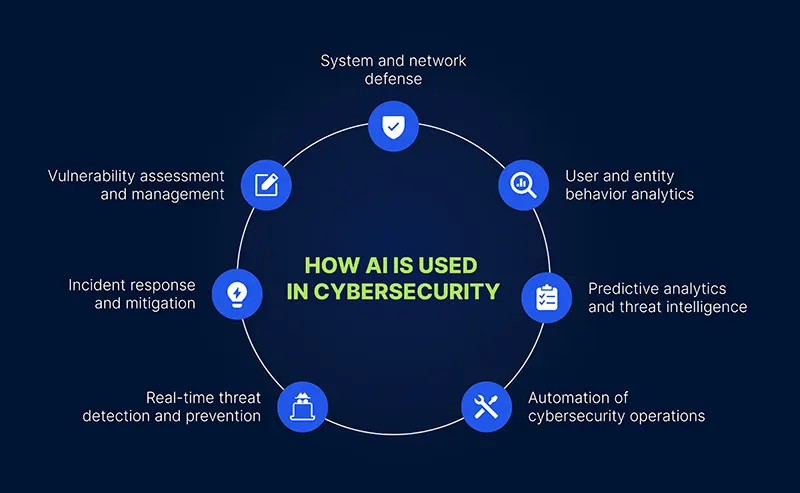
Understanding AI Password Rotation: The Foundation of Modern Credential Management
At its core, ai password rotation refers to the automated process of changing passwords and credentials at predetermined intervals or in response to specific triggers, all powered by artificial intelligence. Unlike traditional methods that require human intervention, these automated rotation tools use AI algorithms to generate strong, unique passwords, detect potential risks, and execute changes without disrupting workflows.
In 2026, the integration of AI has taken this to new heights. For instance, AI can analyze user behavior patterns to predict when a credential might be at risk—such as after a detected phishing attempt—and initiate a rotation proactively. This isn’t just about changing passwords; it’s about creating a dynamic security ecosystem where credentials are constantly evolving to stay ahead of attackers.
Why is this important? According to recent cybersecurity reports, over 80% of data breaches involve compromised credentials. Static passwords are like sitting ducks in a pond full of predators. Ai credential update 2026 tools address this by incorporating machine learning to assess threat intelligence in real-time, ensuring that rotations are not only scheduled but also intelligent.
Let’s break it down further. Traditional password managers store and autofill credentials, but smart rotation software goes beyond that. It automates the entire lifecycle: from generation to rotation and even propagation across dependent systems like services and applications. This reduces the window of opportunity for attackers, as even if a password is stolen, its validity is short-lived.
Consider the evolution: In the early 2020s, password rotation was often manual or rule-based. By 2026, AI has infused these processes with predictive analytics. For example, if an AI system notices anomalous login attempts, it can trigger an immediate rotation, notifying the user via secure channels. This level of automation is what sets scheduled password changers apart in the current year.
The Key Benefits of Implementing Automated Rotation Tools in 2026
Adopting ai password rotation offers a multitude of advantages, making it a cornerstone of any cybersecurity strategy. First and foremost, it enhances security by minimizing the risks associated with password reuse and longevity. In an era where AI-powered attacks can crack weak passwords in seconds, regular rotations ensure that credentials remain resilient.
One major benefit is compliance. Regulations like GDPR, HIPAA, and the upcoming NIST guidelines for 2026 emphasize the need for proactive credential management. Automated rotation tools help organizations meet these standards effortlessly, with audit logs that document every change for transparency and accountability.
Efficiency is another huge win. Manual password changes are time-consuming and prone to errors—think about updating credentials across dozens of systems. Ai credential update 2026 solutions handle this seamlessly, freeing up IT teams to focus on strategic tasks. For businesses, this translates to reduced downtime and lower operational costs.
Moreover, smart rotation software improves user experience. No more remembering complex passwords or dealing with reset fatigue. AI can generate and rotate credentials in the background, with features like single sign-on (SSO) integration ensuring smooth access.
From a risk management perspective, these tools use AI to monitor dark web leaks and breach databases. If a credential appears in a dump, the system can rotate it automatically. This proactive approach is invaluable in 2026, where data breaches are projected to cost trillions globally.
Let’s quantify some benefits: Studies show that organizations using scheduled password changers experience up to 50% fewer credential-related incidents. Additionally, AI-driven rotations can reduce the average time to detect and respond to threats by 30%, according to cybersecurity benchmarks.

Top AI Password Rotation Automators: Reviewing the Best Tools for 2026
As we survey the market in 2026, several standout automated rotation tools have risen to prominence, each offering unique features tailored to different needs. Based on my expertise and industry analyses, here are the top contenders in the realm of ai password rotation.
- Keeper Security: Keeper has evolved into a powerhouse for ai credential update 2026. Its PAM (Privileged Access Management) module uses AI to automate rotations across enterprise environments. Features include scheduled changes, AI threat detection, and seamless integration with SIEM systems. Pricing starts at $3 per user/month, making it accessible for SMBs. What sets it apart is its zero-knowledge architecture, ensuring that even Keeper can’t access your data.
- LastPass: Known for its user-friendly interface, LastPass incorporates AI to suggest and execute rotations based on security scores. In 2026, its Enterprise edition includes smart rotation software that predicts breach risks using machine learning. It supports multi-device sync and has robust auditing tools. A key feature is automated propagation to dependent services, reducing manual updates.
- NordPass Business: As one of the best overall password managers, NordPass integrates AI for proactive rotations. Its XChaCha20 encryption and AI-driven password generator ensure high security. For scheduled password changers, it offers customizable intervals and alerts for potential compromises. Ideal for teams, with pricing around $4/user/month.
- Bitwarden: Open-source and cost-effective, Bitwarden has added AI enhancements in 2026 for automated rotations. It’s particularly strong in self-hosted environments, allowing full control. Features like event-based triggers (e.g., after a login from a new location) make it a versatile automated rotation tool.
- 1Password: With its Watchtower feature powered by AI, 1Password monitors for vulnerabilities and initiates rotations. In 2026, it excels in family and business plans, offering secure sharing and compliance reporting. Its integration with passkeys represents the future of ai password rotation.
- Dashlane: Dashlane’s AI analyzes password health and automates changes. It’s user-centric, with VPN inclusion for added security. For enterprises, its smart rotation software supports API integrations for custom automations.
- Zoho Vault: Affordable and feature-rich, Zoho uses AI for anomaly detection and scheduled rotations. It’s great for integrations within the Zoho ecosystem, making it suitable for businesses already using their tools.
- ManageEngine Password Manager Pro: This tool shines in enterprise settings with AI for password policies and rotations. It handles service accounts effectively, propagating changes to avoid disruptions.
When evaluating these, consider factors like scalability, ease of use, and integration capabilities. In my experience, starting with a trial of Keeper or LastPass can provide insights into how ai password rotation fits your setup.
How to Choose the Right Scheduled Password Changers for Your Needs
Selecting the ideal scheduled password changers involves assessing your specific requirements. As a cybersecurity specialist, I recommend starting with a threat assessment: What are your most vulnerable assets? For enterprises, prioritize tools with AI for large-scale rotations; for individuals, focus on ease and affordability.
Key criteria include:
- AI Capabilities: Does it use machine learning for predictive rotations?
- Customization: Can you set intervals, triggers, and policies?
- Integration: Compatibility with existing systems like Active Directory or cloud services.
- Security Features: Look for end-to-end encryption, MFA, and audit trails.
- Cost vs. Value: Balance features with budget; free tiers like Bitwarden are great starters.
- User Support: Reliable customer service and community resources.
In 2026, also consider passkey support, as ai password rotation is shifting toward passwordless authentication. Tools like 1Password are leading this transition.
Potential pitfalls: Avoid tools without robust encryption or those that store master keys insecurely. Always check for compliance certifications.
Implementing Smart Rotation Software: A Step-by-Step Guide
Rolling out smart rotation software requires careful planning. Here’s a practical guide based on my implementations:
- Assess Current State: Inventory all credentials and identify rotation needs.
- Choose Tool: Select based on the criteria above.
- Set Up Policies: Define rotation schedules—e.g., weekly for high-risk accounts.
- Integrate Systems: Connect to directories, apps, and services.
- Test Rotations: Run simulations to ensure no disruptions.
- Train Users: Educate on new processes to avoid resistance.
- Monitor and Optimize: Use AI analytics to refine over time.
Common challenges include dependency breaks (e.g., services failing after rotation). Solutions: Use tools with auto-propagation like IT Glue.
Case Study: A mid-sized firm I consulted reduced breaches by 40% after implementing Keeper’s ai password rotation, with AI detecting and rotating compromised creds automatically.
Addressing Common Challenges in AI Credential Update 2026
While powerful, ai credential update 2026 isn’t without hurdles. One issue is over-rotation, leading to user frustration. Mitigate with smart triggers rather than rigid schedules.
Another is integration complexity. Not all legacy systems support automated changes; here, hybrid approaches with manual overrides help.
AI biases in threat detection can occur; ensure diverse training data for your tool.
Finally, cost: Enterprise solutions can be pricey, but ROI from prevented breaches justifies it.
Frequently Asked Questions (FAQs) About AI Password Rotation
To address common queries:
- What is ai password rotation? It’s the AI-driven automation of changing credentials on a schedule or trigger to enhance security.
- Are automated rotation tools secure? Yes, with zero-knowledge encryption and compliance standards.
- How often should I use scheduled password changers? Depends on risk; high-sensitivity accounts every 30-90 days.
- Can smart rotation software handle service accounts? Absolutely, tools like Securden propagate changes seamlessly.
- What’s new in ai credential update 2026? Greater AI integration for predictive analytics and passkey support.
- Is password rotation still necessary with MFA? Yes, as a layered defense, though less frequent with strong MFA.
- How do I start with ai password rotation? Begin with a free trial of NordPass or Bitwarden.
- What are the costs of these tools? From free to $10/user/month for advanced features.
- Can AI detect breached passwords? Yes, by scanning dark web and initiating rotations.
- Are there open-source options? Bitwarden offers robust, customizable solutions.
Conclusion: Embracing AI Password Rotation for a Secure Future
In conclusion, ai password rotation represents the pinnacle of proactive cybersecurity in 2026. By leveraging automated rotation tools, ai credential update 2026 capabilities, scheduled password changers, and smart rotation software, we can significantly mitigate risks in an increasingly hostile digital world. As threats evolve, so must our defenses—adopting these technologies isn’t just recommended; it’s imperative.
From my perspective as a cybersecurity expert, the real power lies in integration: Combine these tools with education, MFA, and regular audits for unbreakable security. The future is passwordless, but until then, intelligent rotations bridge the gap. Invest in these solutions today to safeguard tomorrow. Your credentials—and your peace of mind—depend on it.
Continue Reading
The Best Hardware Security Keys (U2F/FIDO2) for Quantum-Safe Login: 2026 Tactical Guide
In 2026, software-based 2FA is no longer enough to stop AI-driven phishing. To protect your digital identity against...
Read Insight →The Best Post-Quantum Hardware Security Modules (HSM) for Home Servers: Hardening Your Root of Trust
In 2026, the "Harvest Now, Decrypt Later" threat is no longer a theoretical exercise for academic papers. To...
Read Insight →Quantum Malware Detectors 2026: 5 Next-Gen Tools to Stop Devastating Harvest-Now-Decrypt-Later Threats
Discover the best quantum malware detectors 2026 engineered to preempt devastating Harvest-Now-Decrypt-Later (HNDL) threats. Read our expert, hands-on...
Read Insight →